
One of the common requirements we have heard from Jira Service Management customers is:
“Can JSM automatically assign requests based on agent availability and workload?”
Until now, teams often had to manage this process manually or use additional configurations to distribute work across their support teams.
Now, the wait is over.
Jira Service Management has introduced Workforce, bringing smarter work assignment based on agent availability, schedules, and capacity.
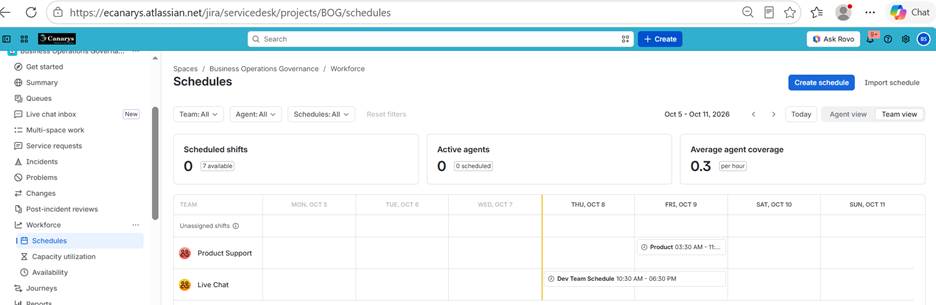
What Does Workforce Do?
With Workforce, JSM can automatically determine which agent should receive a work item based on the configured workforce information.
Admins can:
- Connect the teams responsible for handling requests
- Enable automatic assignment
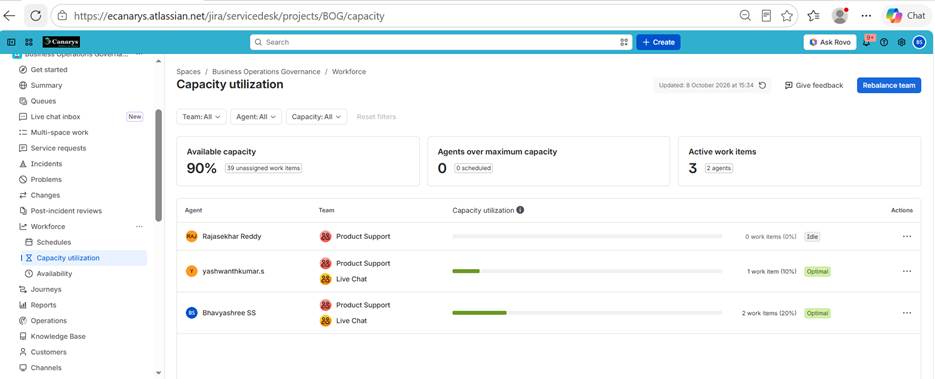
- Define agent capacity
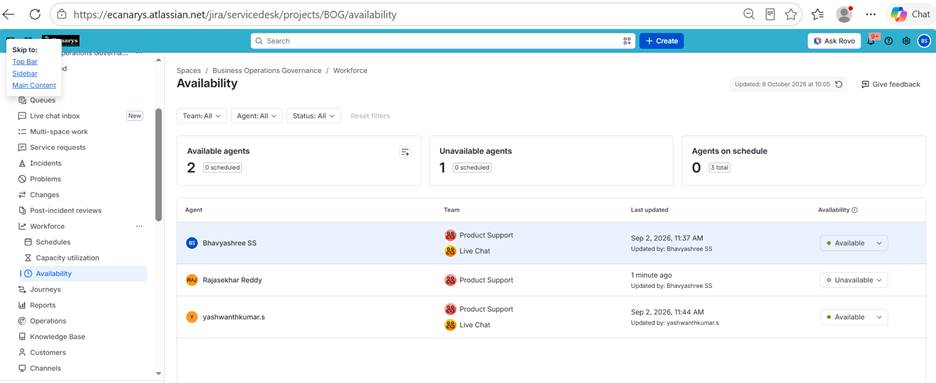
- Manage agent availability
- Set a default team for incoming work
This means service managers don’t have to manually check who is available or who already has too many requests before assigning new work.
Keep Workloads Balanced
For example, imagine a support team has five agents.
Some agents may already be handling several requests, while others have available capacity.
With Workforce, JSM can consider these factors when assigning new work, helping distribute requests more effectively across the team.
If a request cannot be assigned, it can be moved to the unassigned queue so that it doesn’t get lost.
Why This Matters
This is a feature many JSM customers have been waiting for because work assignment is not just about who belongs to a team, it’s also about who is available and who has the capacity to take on more work.
Workforce helps bring these considerations directly into JSM.
With Workforce, organizations can move from manually deciding “Who should take this ticket?” to letting JSM consider availability, schedules, and capacity when assigning work.
It’s a small change in the assignment process, but it can make a big difference for busy service teams.